Everest region mountain trail landscape
Everest Region

Everest 3 Passes Trek

Difficulty Strenuous
Duration 22 Days
Max. Altitude 5,545 m / 18,192 ft
Best Season Apr-May, Sep-Nov
Lodging & Meals Tea House & Hotel

Everest 3 Passes

Everest Three High Passes Trek is the ultimate trek for thrill-seekers and adventurers in the Everest region. In this trek, you will not only reach the Everest Base Camp but also pass through the three highest passes in the Khumbu region – Kongma La Pass (5,535/18,159ft), Cho La Pass (5420m/17,782ft), and Renjo La Pass (5,340m/17,520ft).

The Everest 3 High Passes Trek is one of the most adventurous treks in the world that takes you deep into the Everest region. You get to see what lies around Everest, how the geography elevates to give rise to the world's highest mountain.

The trekking is intense and provides a more detailed picture of the harsh terrain, cold climate, and constant human struggle in high altitudes.

Needless to say that Everest does not rise alone. In fact, several high mountains lie around the Everest vicinity - including Lhotse (8,516m), Ama Dablam (6,812m), Makalu (8,516m).

Everest Three High Passes Trek takes place in the Sagarmatha National Park region. Sagarmatha National Park covers an area of 1148 sq. Km.

This national park is home to 118 bird species, rare mammals like musk deer, snow leopard, red panda, and Himalayan black bear. The vegetation of this region is dwarf-sized, and plants stop growing at altitudes above 5,750m.

Your 17 days Everest High Pass Trek begins with a breathtaking 45-minute flight from Kathmandu to Lukla (2,840m).

After the flight, you will be trekking to Phakding (2,610m), where we will be spending the night. The following morning, after crossing several suspension bridges over the fast-flowing white rivers, we will reach Namche Bazaar (3,440m).

Namche Bazaar is a perfect place for us to acclimate and is full of shops, restaurants, and internet cafes. We will also visit nearby monasteries, the chief among them is Khumjung Monastery. If you want to see the traditional Sherpa settlement, you can trek for an hour. While acclimatizing at Namche Bazaar, you also get a chance to get the first glances of Mt. Everest by hiking up to Everest View Hotel.

After a rest day at Namche, we continue our Three High Passes Trek by heading to Thame (3,750m). This is where our path separates from classic Everest Base Camp Trek, which continues to Tengboche. We follow the Bhote Koshi River to reach Thame. There is a small hydroelectric plant that comes before Thame.

We wake up at Thame and brace for another day of trek towards Lungden (4,500m). The paths are quite challenging, and you need to trek for about six hours to reach Lungden, where we will spend our night.

The next day will be exciting as well. We will leave Lungden behind and head for the Gokyo Lakes region. Somewhere in between Lungden and Gokyo lies Renjo La Pass (54,35m), the first among the three major passes we will cross. From Renjo La Pass, you can see amazing views of the Gokyo Lake system and many Himalayan Peaks - including Everest (8,848m), Lhotse (8516m), Makalu (8,481m), Cho Oyu (8,201m), and Ama Dablam (6,812m). We will stay at Gokyo for the night and spend the following day acclimatizing.

As we acclimatize in Gokyo, we will go to Gokyo Ri (5,483m) from where you can see four among the six highest mountains in the world - Everest (8,848m), Lhotse (8,516m), Makalu (8,485m), and Cho Oyu (8,188m). The scenes from the Gokyo Ri are probably the best in the Everest Region, and the sights are mind-blowing.

Next, we will continue our journey from Gokyo to Thagnak (4,700m), crossing Ngozumpa Glacier on the way. From the trails, in addition to awesome Himalayan terrains, you will also get a chance to see yak pastures, or if you are lucky yaks grazing on them.

The next day's destination is Dzongla (4,855m), and on the way lies Cho La Pass (5,420m). You will be walking through the Chola Pass, and it is the second major pass in this trek. This pass connects the Gokyo region and Everest region and serves as an Everest Viewpoint.

By crossing Cho La Pass, you have entered the Everest Region, and we will be heading towards Everest Base Camp, but we have to stop in two places - Lobuche (4,910m) and Gorak Shep (5,185m).

As we move forward from Dzongla to Lobuche, you will get to see the memorial statues of travelers who succumbed to the harsh conditions in this region.

The eleventh day of the trek is going to be extraordinary; you will wake up at Lobuche (4,930m) and head to Gorak Shep (5,185m).

You will have to walk for about eight hours to reach Gorak Shep, where you will leave your belongings and climb to Everest Base Camp (5,364m). It is a huge achievement. Despite the harsh terrain, high altitude, and challenging climate, you succeeded in reaching the Everest Base Camp. We do appreciate your effort and determination.

After spending time on EBC, we will descend to Gorak Shep and spend the night there. The following morning we will wake up at Gorak Shep and trek to Kala Patthar (5,555m), from where we can catch the heavenly sight of dawn breaking on Mt. Everest. We will soak in the incredible scenery and get back to Gorak Shep and descend to Lobuche to spend the night.

The following morning we will wake up at Lobuche and head to Chhukung (4,730m), and in between lies Kongma La Pass (5,535m) - the last of our three major passes. It is also the highest pass among the three passes and is challenging but remember that the more challenging a trek is - the more rewards you will be reaping. We will be spending the night at Chhukung for that day.

On our fourteenth day, we leave Chhukung behind and head to Tengboche (3,855m) and pass Dingboche and Pangboche on the way. From the trails, you get to see cultivated lands, surrounded by stones, so that the crops are safe from cold winds and wild animals. The path allows you to see some of the spectacular scenes of Amadablam (6856m), Everest (8848 m), Nuptse (7861m), and Lhotse (8501m). We will not forget to visit the famous Tengboche monastery as well.

Our trek is coming to an end, and the next day's trek will take us back to Namche Bazaar. The way is uneven and passes through dense forest, and if you are lucky, you will get a chance to see Himalayan pheasants, musk deer, mountain goats, or even snow leopards. We will be spending our night at Namche Bazaar.

On the last day of Everest Three High Passes Trek trails, we will be heading from Namche to Lukla. We return down to Dudh Koshi Valley, cross Hillary Suspension Bridge, and trek for about seven hours to reach Lukla. We will be staying in Lukla for the night. Your Everest Three High Passes Trek in the Everest region is almost over, and you are just a night away from returning to Kathmandu.
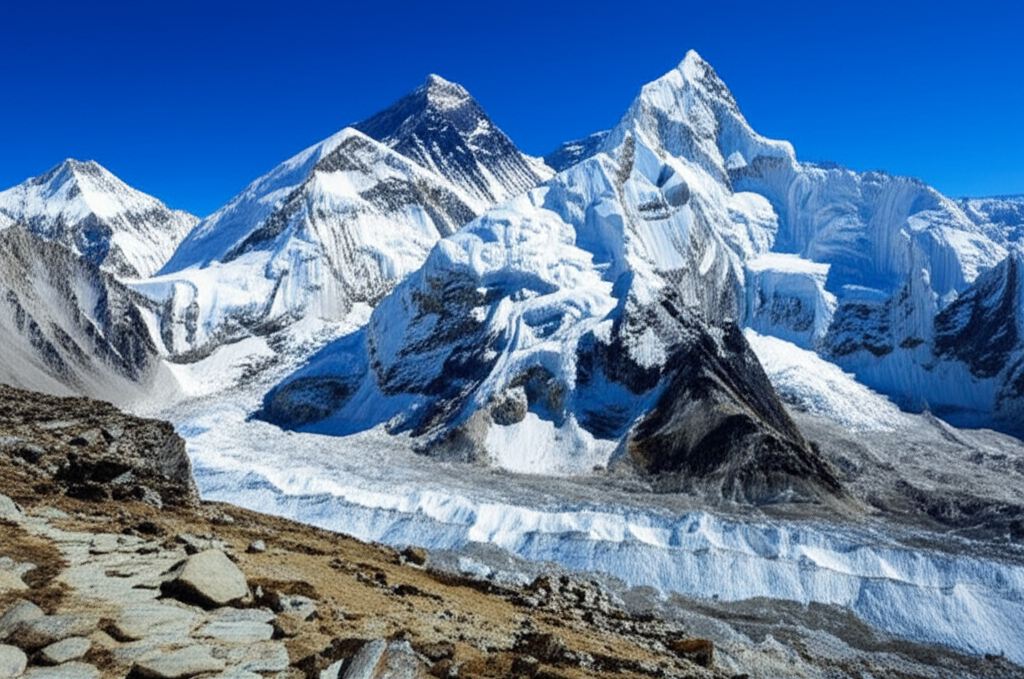
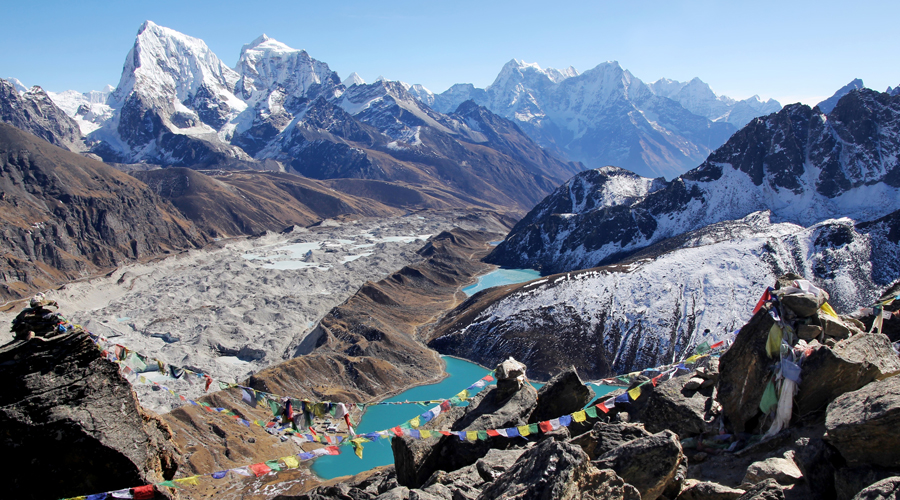
Everest Three Passes Trek landscape view
Signature Experiences

Expedition Highlights

01

A scenic flight to Lukla or ramechap manthali

02

Spellbinding view of mountains from the three high passes (Kongma La, Cho La & Renjo La)

03

Famous Sherpa town in the Everest region - Namche Bazaar

04

Nepal's highest airport Syangboche

05

Stunning views from Gokyo Ri

06

One of the world's highest hotels - Everest Hotel

07

Gokyo Lakes

08

Ancient monastery in Tengboche

09

Prayer wheels, colorful flags, Mani stones, high suspension bridges

10

The wide range of flora and fauna

11

Wildlife like musk deer, colorful pheasants, snow leopard, and Himalayan Thar

12

Highest glacier on Earth- Khumbu Glacier (4900m)

13

Amazing panoramic view from Kala Patthar (5,555m)

Trail Logs & Itinerary

1
Trekking Day Max Elev: 5,545 m / 18,192 ft

We meet you at the airport, transfer you to the hotel, and give you time to settle in before the trek.

2
Trekking Day Max Elev: 5,545 m / 18,192 ft

This day is for briefing, checking gear, and making the final preparations before flying to Lukla.

3
Trekking Day Max Elev: 5,545 m / 18,192 ft

The mountain trip starts with the Lukla flight, followed by a shorter walk to Phakding.

4
Trekking Day Max Elev: 5,545 m / 18,192 ft

We follow the Dudh Koshi valley and climb steadily to Namche, the main center of the Khumbu.

5
Trekking Day Max Elev: 5,545 m / 18,192 ft

A rest day in Namche includes a short hike for acclimatization before going higher.

6
Trekking Day Max Elev: 5,545 m / 18,192 ft

We continue to Tengboche, known for its monastery and wide mountain views.

7
Trekking Day Max Elev: 5,545 m / 18,192 ft

The route climbs above the tree line into a broader alpine valley on the way to Dingboche.

8
Trekking Day Max Elev: 5,545 m / 18,192 ft

We leave Dingboche and head into the upper valley toward Chhukung, one of the stepping stones for the first pass.

9
Trekking Day Max Elev: 5,545 m / 18,192 ft

This extra acclimatization and viewpoint day gives big views and helps prepare for higher terrain.

10
Trekking Day Max Elev: 5,545 m / 18,192 ft

The first major pass is long and demanding, with high mountain terrain and glacial surroundings.

11
Trekking Day Max Elev: 5,545 m / 18,192 ft

We walk to Everest Base Camp and then return to Gorak Shep for the night.

12
Trekking Day Max Elev: 5,545 m / 18,192 ft

An early climb to Kala Patthar gives famous Everest views before we continue toward Dzongla.

13
Trekking Day Max Elev: 5,545 m / 18,192 ft

We cross the steep and often snowy Cho La and descend to Dragnak on the far side.

14
Trekking Day Max Elev: 5,545 m / 18,192 ft

The route leads across rough mountain ground to the Gokyo lakes area.

15
Trekking Day Max Elev: 5,545 m / 18,192 ft

We climb Gokyo Ri for one of the best viewpoints in the Khumbu, then return to rest in Gokyo.

16
Trekking Day Max Elev: 5,545 m / 18,192 ft

The final high pass brings wide views before we descend into a quieter side valley.

17
Trekking Day Max Elev: 5,545 m / 18,192 ft

We continue down through traditional Sherpa country to Thame.

18
Trekking Day Max Elev: 5,545 m / 18,192 ft

The trail returns to Namche, where the route reconnects with the busier main Everest path.

19
Trekking Day Max Elev: 5,545 m / 18,192 ft

We complete the last full walking day and return to Lukla.

20
Trekking Day Max Elev: 5,545 m / 18,192 ft

We fly back to Kathmandu and return to the hotel after the trek.

21
Trekking Day Max Elev: 5,545 m / 18,192 ft

This day is kept free for rest, buffer time, or personal plans in Kathmandu before departure.

22
Trekking Day Max Elev: 5,545 m / 18,192 ft

We transfer you to the airport for your onward flight and close the journey.

Inclusions

  • Airport Pick up drop
  • Three-night Hotel in Kathmandu with Breakfast
  • Meals During Trek: (Breakfasts, Lunch, and dinners) during the trekking.
  • Sagarmatha National Park Permit (Rs, 3000 per person)
  • Pasang Lhambu Rural Manicipility entrance fee (Rs,2000 per person)
  • Including Domestic airport pick-up and drop service.
  • Both-way domestic flight ticket (Kathmandu to Lukla / Kathmandu)
  • Government license holder mountain guide.
  • 16 nights of tea house accommodation throughout the trek.
  • Farewell dinner.
  • Porter and Staff insurance

Exclusions

  • Nepal entry visa fee (you may easily issue the visa upon your arrival at Tribhuwan International Airport – Katmandu).
  • Your Travel and rescue insurance.
  • Personal porter.
  • All the Food in Kathmandu except the breakfast & farewell dinner.
  • All the expenses in the mountain over than scheduled itinerary (due to strike, delay, or canceled flight)
  • Extra night Hotel in Kathmandu if arrive early or late departure than scheduled Itinerary.
  • All the Bar bills and personal expenses (phone call, laundry service, battery recharge, a bottle of water, hot water, shower.
  • Tips for the guide and porter.
  • Your international flights
  • Entry fee on the monastery.

Frequently Asked Questions

You need two main permits: the Khumbu Pasang Lhamu Rural Municipality Permit and the Sagarmatha National Park Entry Permit. Both are arranged on the trail by our guide, and the fees are included in your package.
Lukla Airport operates on visual flight rules, meaning flights are regularly delayed or cancelled due to fog or high winds. We include buffer days in our itineraries. In case of extended delays, we can coordinate helicopter flights (subject to availability and extra charges, often covered by travel insurance).
For standard Everest Base Camp treks, the highest point is Kala Patthar at 5,545 meters (18,192 ft), which offers the best views of Mt. Everest, Lhotse, and Nuptse. Acclimatization is key to enjoying this trek safely.
Teahouses in the Everest region are relatively well-established. Most offer shared rooms, heated communal dining areas, and menus featuring traditional Dal Bhat, soups, noodles, and pancakes. Hot showers and device charging are available for a small fee.
Yes, cellular data (Ncell/NTC) works up to Tengboche/Dingboche. Beyond that, you can purchase prepaid Wi-Fi cards from 'Everest Link' which work at most teahouses along the trail, though speeds can vary.
While Namche Bazaar has ATMs, they are frequently out of cash. We recommend carrying around 2,000 to 3,000 Nepalese Rupees (approx. $15–$25 USD) per day in cash to pay for extras like Wi-Fi, battery charging, hot showers, snacks, and tipping guides/porters.
Absolutely. Your travel insurance policy must cover trekking up to 6,000 meters and include emergency helicopter evacuation. Evacuations from the remote Khumbu region can cost upwards of $5,000 USD.