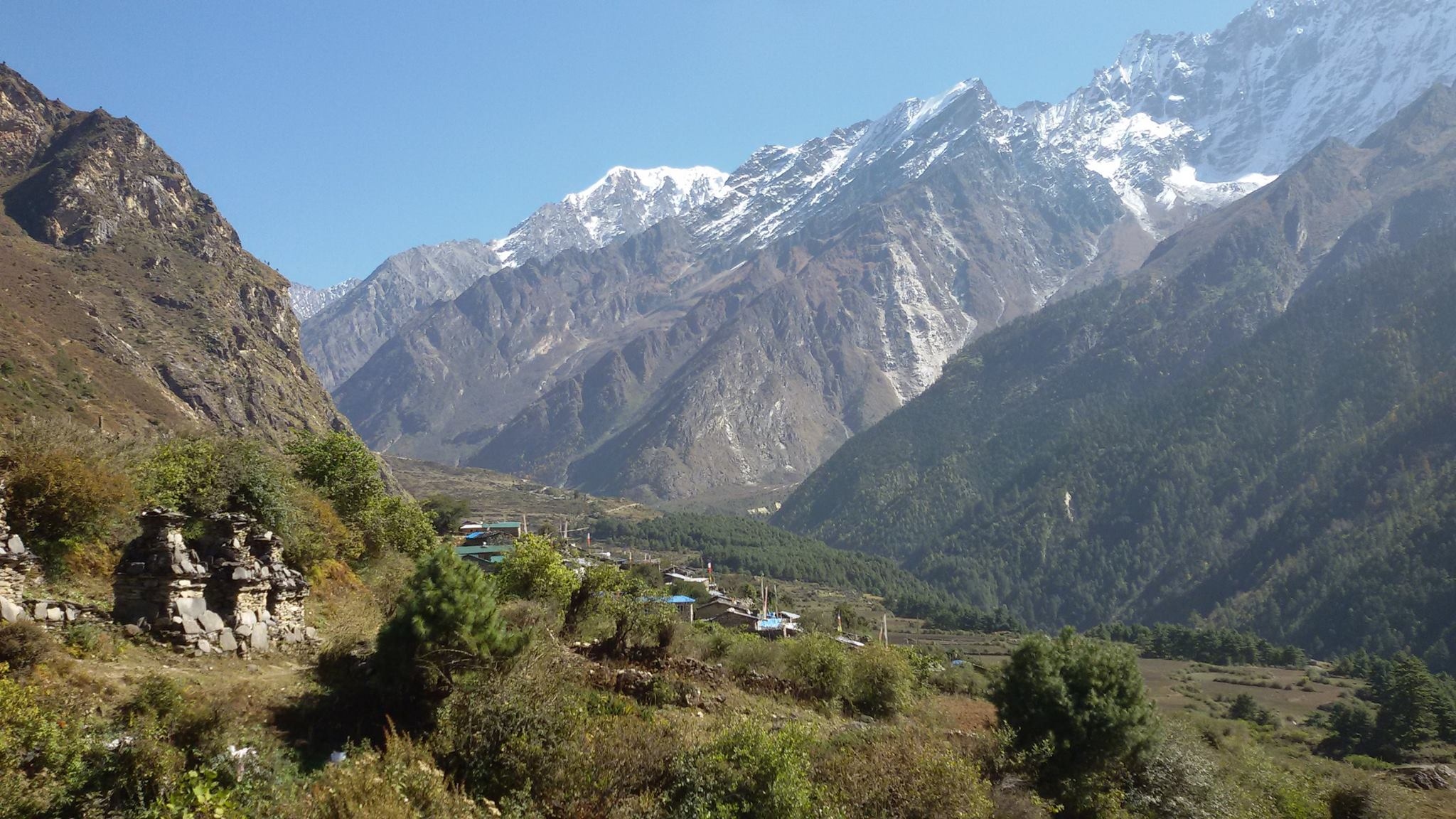
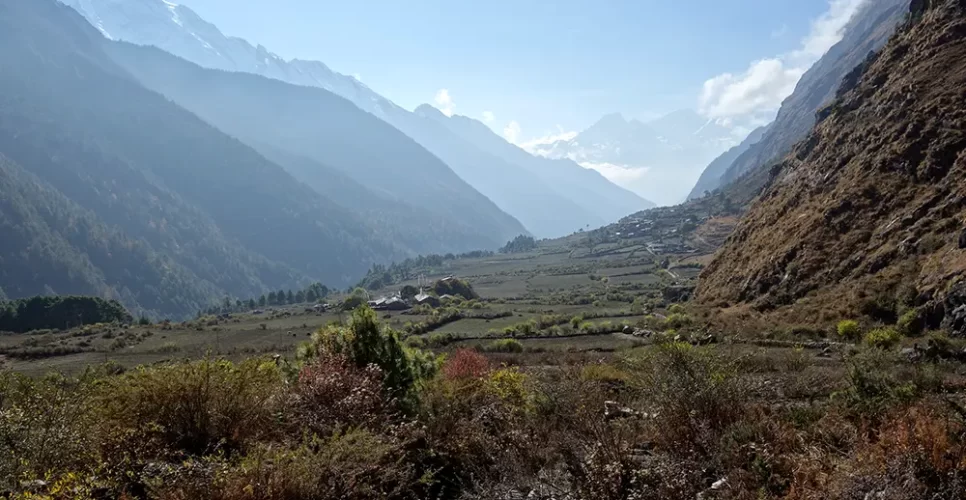
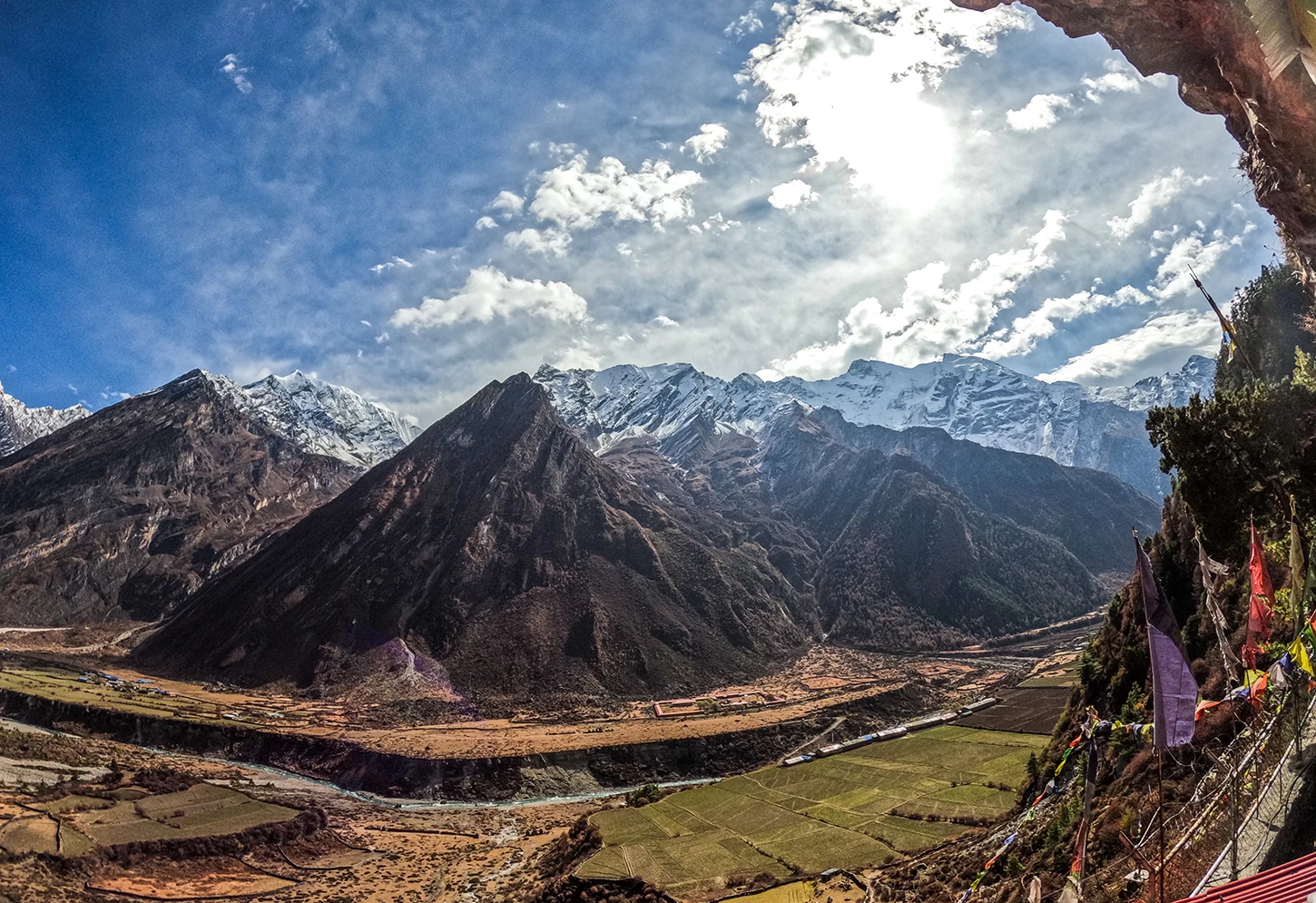
Mountain trail and valley scenery on the Tsum Valley route
Remote & Off-Beaten Region

Tsum Valley Trek

Difficulty Moderate
Duration 16 Days
Max. Altitude 3,700 m / 12,139 ft
Best Season Mar-May, Sep-Nov
Lodging & Meals Lodge / Tea House

Tsum Valley

A restricted-area trek that combines Himalayan village life, Buddhist heritage, and quieter trails in northern Gorkha.

Tsum Valley Trek takes you into the Tsum area of northern Gorkha District, close to the Tibetan border and inside the Manaslu Conservation Area. According to the National Trust for Nature Conservation, the Tsum area includes Chumchet and Chhekampar wards of Tsumnubri Rural Municipality, and the wider conservation area covers 1,663 square kilometers.

A common trek itinerary is around 16 days, beginning from Kathmandu, driving toward the lower Budhi Gandaki valley, and then branching from the main Manaslu trail toward Lokpa and Tsum. On the upper route, many trekkers overnight at Chumling (2,386 m), Chhokang Paro (3,031 m), and Nile (3,361 m), with Mu Gompa (3,700 m) as one of the best-known high points.

Nepal's Department of Immigration classifies Tsum Valley as a restricted trekking area. That means trekkers must go through an authorized trekking agency, must be accompanied by a licensed guide, and cannot obtain the restricted-area permit as a solo FIT trekker. Immigration also requires a minimum of two trekkers for the restricted permit.

Nepal Tourism Board lists the best season for the Manaslu Conservation Area as March to May and September to November, with both lodges and camping used in the region. If you want a trek centered on culture, monasteries, and a more peaceful pace than Everest or Annapurna, Tsum Valley stands out for exactly that reason.
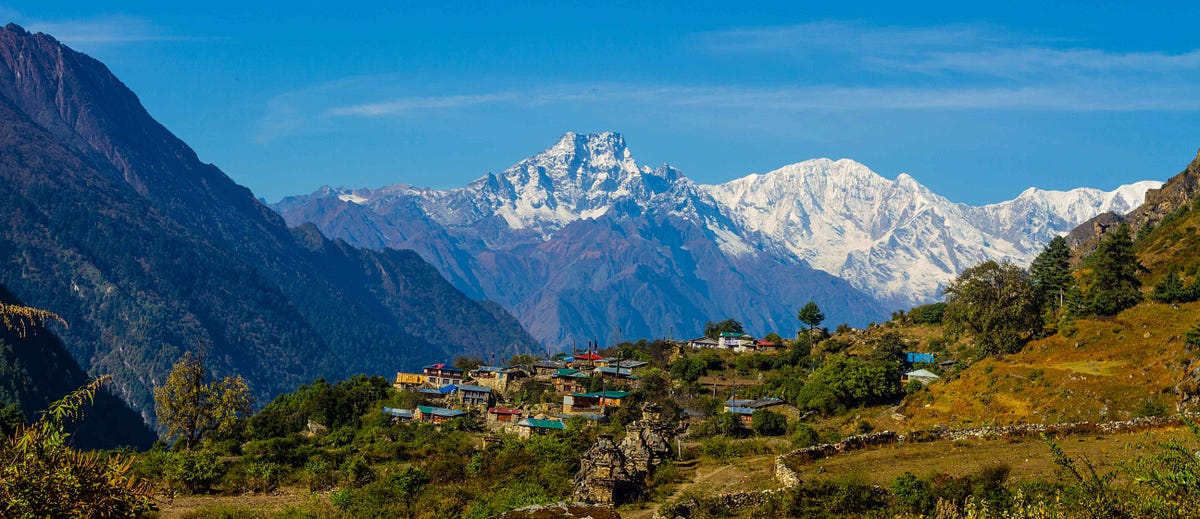
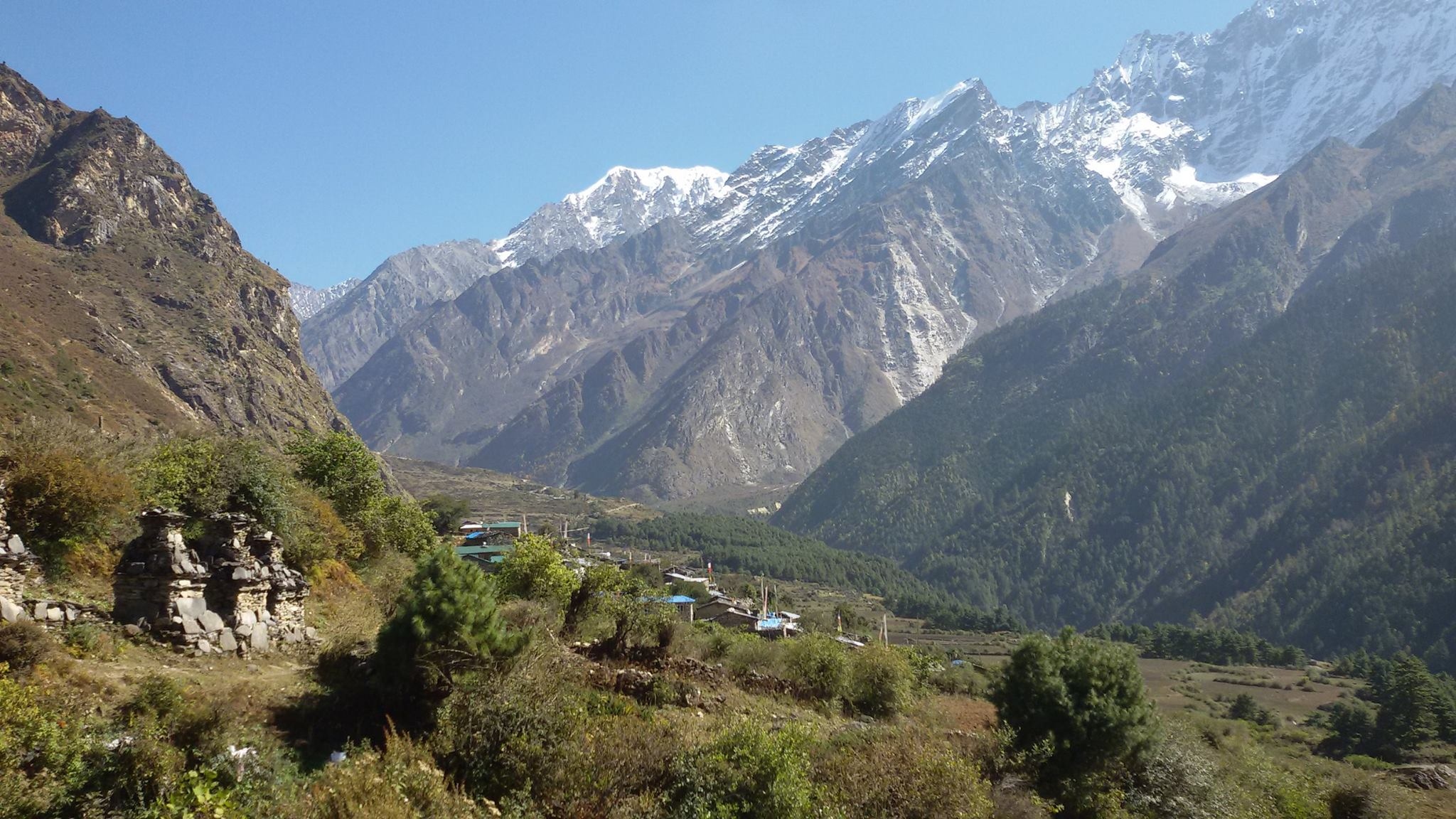
Tsum Valley Trek landscape view
Signature Experiences

Expedition Highlights

01

Trek through Chumling, Chhokang Paro, Nile, and Mu Gompa on one of Nepal's quieter Himalayan cultural routes.

02

Travel in the Tsum area of Tsumnubri Rural Municipality, inside the 1,663 sq. km. Manaslu Conservation Area.

03

See living Tibetan Buddhist culture through mani walls, chortens, monasteries, and traditional stone villages.

04

Visit upper-valley monasteries such as Mu Gompa and walk with views of Ganesh Himal and surrounding high valleys.

05

Trek in the best-known seasons of March to May and September to November, when weather is usually clearer.

Trail Logs & Itinerary

1
Trekking Day Max Elev: 3,700 m / 12,139 ft

We meet you at the airport, transfer you to the hotel, and help you settle in after the journey.

2
Trekking Day Max Elev: 3,700 m / 12,139 ft

We leave Kathmandu early and drive into the lower Manaslu region, reaching the trail area by evening.

3
Trekking Day Max Elev: 3,700 m / 12,139 ft

The trek begins with river crossings, small villages, and a steady walk deeper into the valley.

4
Trekking Day Max Elev: 3,700 m / 12,139 ft

We continue along the Budhi Gandaki route and then branch toward the quieter Tsum Valley side.

5
Trekking Day Max Elev: 3,700 m / 12,139 ft

From Lokpa, the trail enters the Tsum side valley and reaches Chumling, one of the first major villages on the standard route.

6
Trekking Day Max Elev: 3,700 m / 12,139 ft

The route climbs higher through broader valley scenery, with more open views and stronger signs of Tibetan Buddhist culture.

7
Trekking Day Max Elev: 3,700 m / 12,139 ft

The upper valley feels more remote as the trail continues toward Nile, one of the highest regular overnight stops on the trek.

8
Trekking Day Max Elev: 3,700 m / 12,139 ft

Today is the classic excursion to Mu Gompa, one of Tsum Valley's best-known monasteries, before descending back to sleep at Nile.

9
Trekking Day Max Elev: 3,700 m / 12,139 ft

We retrace the route back down, with more time to enjoy the valley from a different angle.

10
Trekking Day Max Elev: 3,700 m / 12,139 ft

Today we take a side route toward another important monastery in a quieter and more tucked-away setting.

11
Trekking Day Max Elev: 3,700 m / 12,139 ft

After some time around the monastery, we descend and rejoin the lower valley route.

12
Trekking Day Max Elev: 3,700 m / 12,139 ft

The trail leads back through familiar hillsides and village sections as we leave the upper valley behind.

13
Trekking Day Max Elev: 3,700 m / 12,139 ft

We continue downward through the lower gorge section with river views and warmer air returning.

14
Trekking Day Max Elev: 3,700 m / 12,139 ft

The final walking stage follows the lower trail back toward the road head.

15
Trekking Day Max Elev: 3,700 m / 12,139 ft

We return to Kathmandu by road and check back into the hotel for a well-earned rest.

16
Trekking Day Max Elev: 3,700 m / 12,139 ft

We transfer you to the airport for your onward flight and say goodbye.

Inclusions

  • Department of Immigration rate for the Tsum Valley restricted area is USD 40 per person per week from September to November.
  • From December to August, the restricted-area permit is USD 30 per person per week.
  • After the first week, the official additional charge is USD 7 per person per day.
  • Manaslu Conservation Area entry fee is listed by Nepal Tourism Board as NPR 2,000 for foreigners and NPR 200 for SAARC nationals.
  • Nepal Tourism Board includes Tsum Valley among trekking routes that require a guide and a TIMS card.
  • NTB currently lists TIMS at NPR 2,000 for non-SAARC trekkers and NPR 1,000 for SAARC trekkers.
  • A common standalone itinerary runs for about 16 days, including the overland approach from Kathmandu.
  • The most commonly cited overnight stops on the upper route are Chumling, Chhokang Paro, Nile, and Mu Gompa.
  • The highest common overnight or excursion point on a standard Tsum Valley route is around 3,700 meters at Mu Gompa.
  • This is generally considered a moderate trek, but daily walking includes repeated ascents and descents on mountain trails.
  • Spring and autumn are the preferred seasons because of clearer mountain views and more stable trail conditions.
  • Accommodation is usually in simple lodges or teahouses, with camping still used in some itineraries or special departures.

Exclusions

  • Nepal entry visa fees, international flights, and travel insurance are separate from official trekking permit fees.
  • Private guide, porter, transport, and hotel costs vary by trekking agency and group size, so they should be quoted separately.
  • Charging, hot showers, drinks, snacks, and personal gear costs depend on the lodge and the season.
  • Because there is no single official retail trek price, package pricing should be confirmed directly with the operator.

Frequently Asked Questions

Yes. Unlike popular regions like Everest or Annapurna, remote regions (like Manaslu, Dolpo, or Kanchenjunga) have simpler teahouses or require camping. Facilities are basic, featuring shared squat toilets and limited hot water.
Many remote borders require Restricted Area Permits (RAPs) and must be hiked with a registered guide and a minimum of two trekkers. Our agency handles all permit processing for you.
Charging is mostly solar-powered and available at lower teahouses for a fee. Wi-Fi is rare or non-existent in remote villages. We recommend bringing a high-capacity power bank and a local SIM card.
The trails are less developed, more rugged, and see very few tourists. You should expect steep ascents, high mountain passes (like Larkya La at 5,106m), and long walking days over challenging terrain.
Since there are absolutely no ATMs in remote regions, you must withdraw sufficient cash in Nepalese Rupees in Kathmandu. We recommend budgeting at least 2,500 Rupees ($20 USD) per day for personal expenses.
You should pack high-quality gear: a warm sleeping bag (rated to -15°C), broken-in trekking boots, thermal layers, water purification tools, basic toiletries, and a small personal first-aid kit with altitude medication.