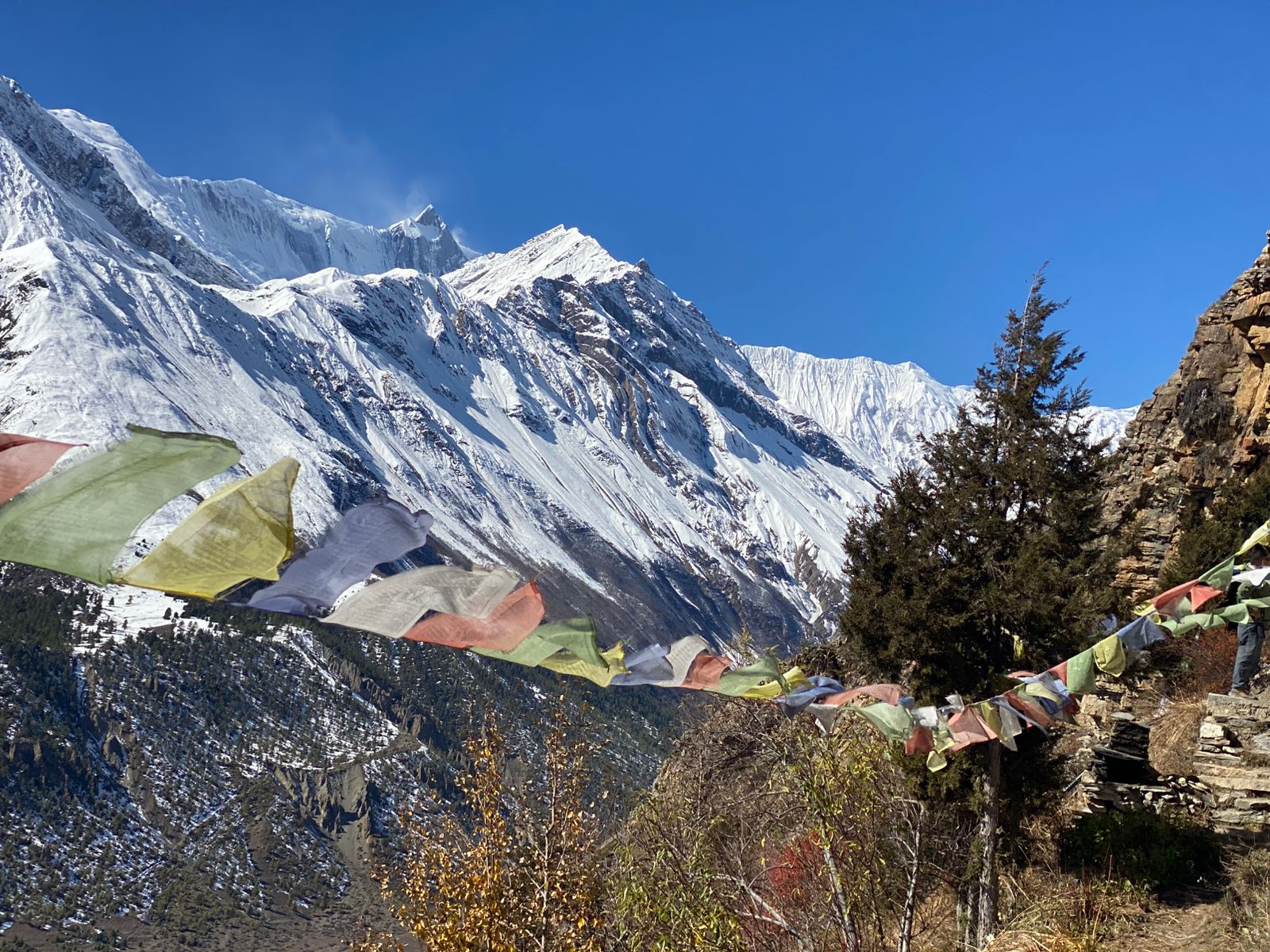
Annapurna Circuit mountain landscape
Nepal Region

Annapurna Grand Tour via Ghorepani

Difficulty Moderate to Strenuous
Duration 15 Days
Max. Altitude 5,416 m/17,769 ft
Best Season Mar-May, Sep-Dec
Lodging & Meals Tea House & Hotel

Annapurna Grand Tour via Ghorepani

Annapurna Circuit trek starts from Beshishar or above places after a day's drive from Kathmandu. You start by walking through rice fields, then grain belt, pastures, forests, and finally exit above the tree line to cross Thorang La before descending into a completely different valley, the Kali Gandaki, the deepest valley in the world. The trek which circles the Annapurna massif reaches a height of 5,416 m at Thorang La Pass. You start walking from Besisahar passing through Bahundanda, Bagarchap, Chame, Upper Pisang, Manang and Yak Kharka to cross the Thorang La pass, before reaching Muktinath.

The villages you pass through on this trek are varied - from Nepalese to Tibetan, you see the cultures change as the trek progresses. After completing the tour, you will descend to Ghorepani. After a good night's sleep in Ghorepani, a morning climb will take you to Poon Hill at 3,200m, one of the most popular places in the entire Annapurna region. From Poon Hill you can see the sun rise over the remarkable mountains - which are breathtaking in every way!

The next day you will walk along a forest trail, followed by patches of corn and potato fields to the village of Hile or Ghandruk, Ghandruk village is a popular Gurung settlement, many of whose members have served or are currently serving in the British Army. After spending the night in Ghandruk, you will walk to Phedi village and take a bus to Pokhara.

Best time to hike the Annapurna Circuit

The Annapurna tour is a long day of walking. The hiking route follows high passes and challenging hiking trails. So, trekking in the months of March, April and May in spring in Nepal is the best time for trekking. Due to the dry season and clear skies, trekking along the route is easy and comfortable.

Similarly, trekking in the months of September, October and November of the autumn season in Nepal is another best time to do the trek. However, trekking is possible in winter and rainy season also due to heavy snow on the route in winter. It is very difficult to find the trail and follow the correct path.

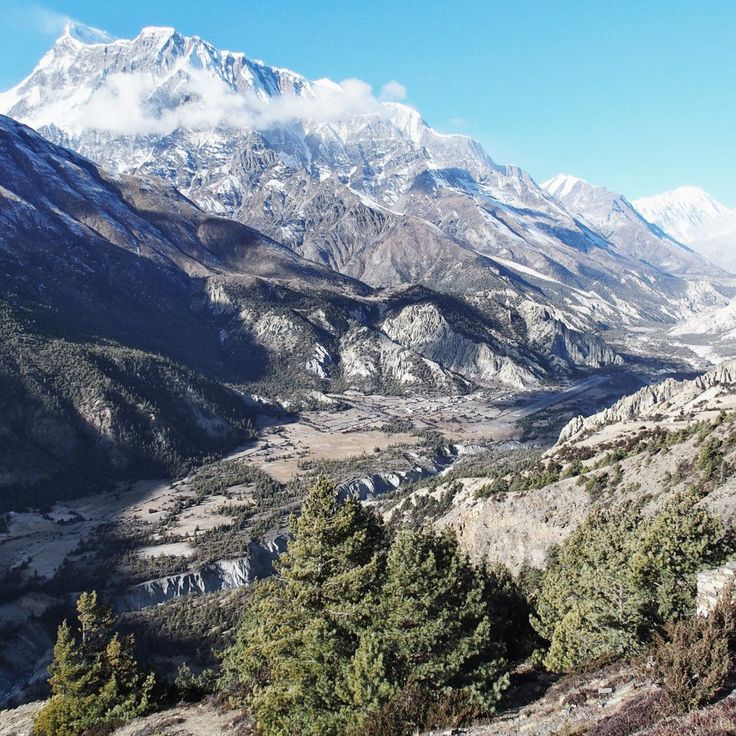
Annapurna Circuit Trek landscape view

Trail Logs & Itinerary

1
Trekking Day Max Elev: 5,416 m/17,769 ft

1400m

2
Trekking Day Max Elev: 5,416 m/17,769 ft

3
Trekking Day Max Elev: 5,416 m/17,769 ft

4
Trekking Day Max Elev: 5,416 m/17,769 ft

5
Trekking Day Max Elev: 5,416 m/17,769 ft

6
Trekking Day Max Elev: 5,416 m/17,769 ft

7
Trekking Day Max Elev: 5,416 m/17,769 ft

8
Trekking Day Max Elev: 5,416 m/17,769 ft

9
Trekking Day Max Elev: 5,416 m/17,769 ft

up to Muktinath 3760m

10
Trekking Day Max Elev: 5,416 m/17,769 ft

11
Trekking Day Max Elev: 5,416 m/17,769 ft

12
Trekking Day Max Elev: 5,416 m/17,769 ft

13
Trekking Day Max Elev: 5,416 m/17,769 ft

14
Trekking Day Max Elev: 5,416 m/17,769 ft

15
Trekking Day Max Elev: 5,416 m/17,769 ft

Take a scenic drive back from Pokhara to Kathmandu. Upon arrival, check into the hotel and enjoy the rest of the day at leisure for shopping or relaxation.

Inclusions

  • Transportation
  • Private vehicle pick-up/drop-off at the airport and transfers to the hotel
  • transfer from Kathmandu to Beshishahar by local bus
  • transfer from Pokhara to Kathmandu by tourist bus
  • Private vehicle: hile, Nayapul (trek ends here) to Pokhara transfer
  • Public Jeep: Transfer from Beshishahar to Jagat (Trek starts from Jagat)
  • Accommodation
  • 3 nights accommodation in Kathmandu in a 3 star category hotel and one nights hotel in
  • Pokhara
  • 14 nights accommodation (twin sharing) during the trek in standard tea houses
  • Food/Drinks
  • Breakfast (B), Lunch (L), Dinner (D) during the trek
  • Breakfasts in Kathmandu/Pokhara in a hotel
  • Welcome and farewell dinner in Kathmandu
  • French-speaking hiking guide
  • A guide assisting every 6 trekkers, including their accommodation, transportation,
  • food, salary, transportation and insurance
  • Porters (1:2 client ratio, carrying up to 15 kg of personal equipment per client)
  • including their accommodation, transportation, food, salary, transport, insurance
  • Permits and Taxes
  • Annapurna Conservation Area Permit (ACAP)
  • TIMS license
  • All applicable taxes payable to the Nepalese government

Exclusions

  • Transportation
  • International flight tickets to and from Kathmandu
  • Domestic flight tickets (if you want you can fly from Pokhara to Kathmandu instead of
  • drive, extra cost)
  • Any other additional transportation (if necessary) outside of the program (such as for
  • shopping, etc.)
  • Accommodation
  • Additional night(s) accommodation in Kathmandu or Pokhara due to arrival
  • early, late departure, early return from the mountain (for whatever reason)
  • compared to the planned route
  • Food/Drinks
  • Soft drinks, tea/coffee and alcoholic drinks are not included and must be
  • purchased separately by the customer
  • Drink water during the trek
  • Desserts are not included, so if ordered they must be paid separately by the
  • customer
  • Lunches and dinners in Kathmandu and Pokhara (and also in case of early return from the mountain
  • compared to planned itinerary - see meal inclusions for details)
  • Others
  • Nepal Tourist Visa (available on arrival at Kathmandu Tribhuvan International Airport)
  • Customer travel insurance
  • All optional/additional activities outside the program
  • Personal expenses such as phone calls, laundry, battery charging,
  • hot shower, extra porters, etc.)
  • Personal equipment and clothing
  • Tips/gratuities for staff (staff expects tips)

Frequently Asked Questions

The best seasons for trekking in Nepal are spring (March to May) and autumn (September to November). The weather is generally dry, the skies are clear and daytime temperatures are pleasant for walking, offering spectacular views of the Himalayas.
Good physical fitness is recommended. You must be able to walk between 5 and 7 hours per day over mountainous and sometimes steep terrain. We advise you to practice cardio activities (running, hiking, cycling) a few weeks before your departure.
Our itineraries include gradual acclimatization days to minimize risks. Our guides are trained to detect the symptoms of AMS. In the event of persistent or severe symptoms, the guide will immediately arrange descent to a lower altitude and coordinate an emergency evacuation by helicopter if necessary.
Accommodation is in 'teahouses' (small local mountain refuges). The rooms are simple and shared, with two single beds. Meals are prepared on site and feature energetic local cuisine like Dal Bhat (rice, lentil and vegetable soup), as well as Western dishes (pasta, soups, eggs, bread).
Yes, it is strictly obligatory to take out travel insurance covering high altitude trekking (up to the maximum height of your route) as well as search, rescue and emergency medical evacuation costs by helicopter.
To protect the fragile Himalayan environment, we discourage the purchase of single-use plastic water bottles. We recommend bringing reusable water bottles and using water purification tablets (like Aquatabs) or a portable filter. You can also buy safe boiled water at teahouses.
The mobile network (Ncell and NTC) works correctly in the lower valleys but becomes weak or non-existent at high altitudes. Most teahouses offer paid satellite Wi-Fi (around $2-$5 per day), but the speed can be slow and unstable depending on weather conditions.