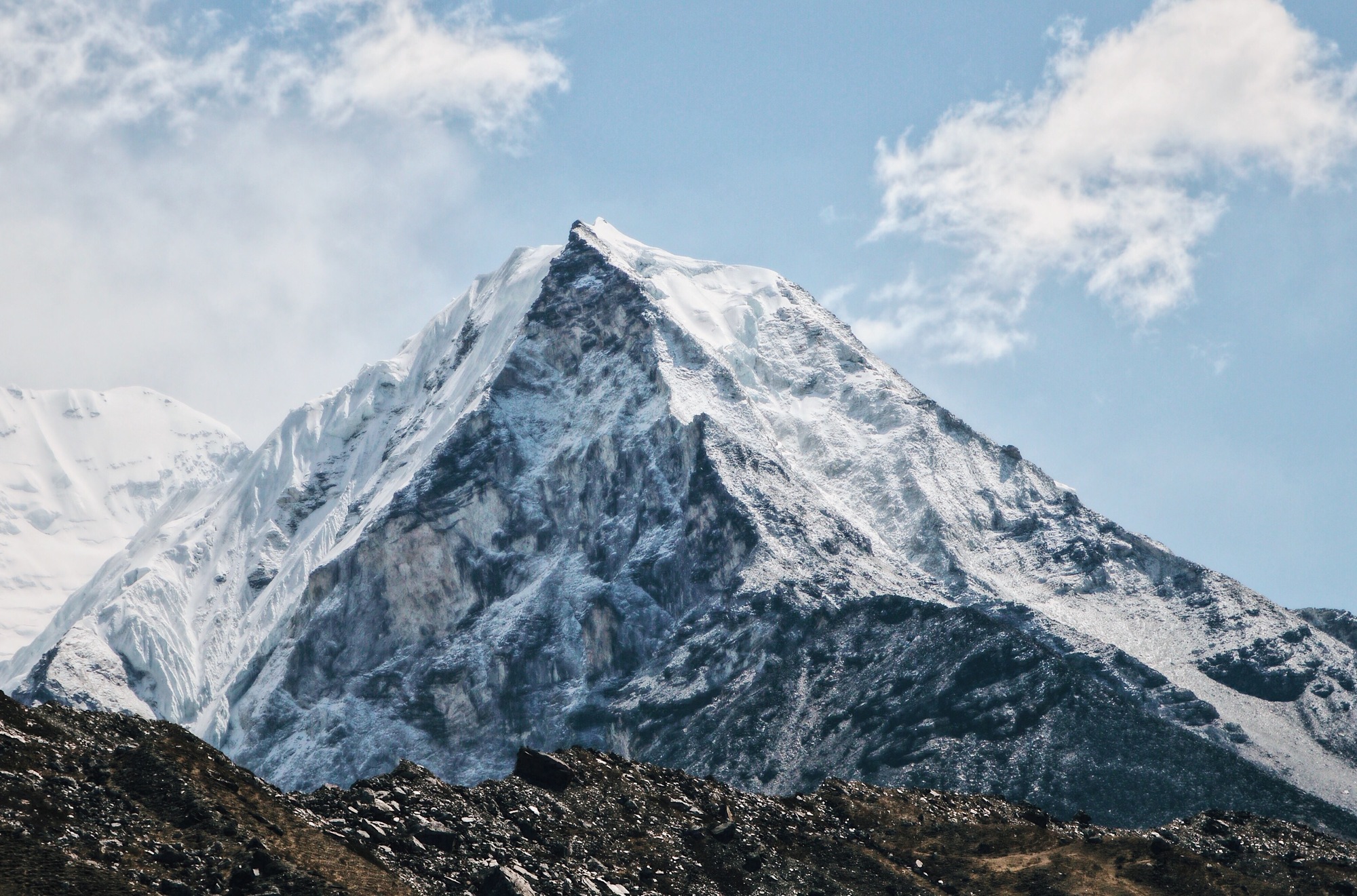
Island Peak and Everest Base Camp trek mountain view
Nepal Region

Everest Base Camp via Gokyo & Cho La Pass + Island Peak – 21 Days

Difficulty Moderate to Strenuous
Duration 21 Days
Max. Altitude 6,189 m/20,305 ft
Best Season Mar-May, Sep-Nov
Lodging & Meals Hotel, Lodge & Tent

Everest Base Camp via Gokyo & Cho La Pass + Island Peak – 21 Days

Everest Base Camp via Gokyo & Cho La Pass + Island Peak – 21 Days

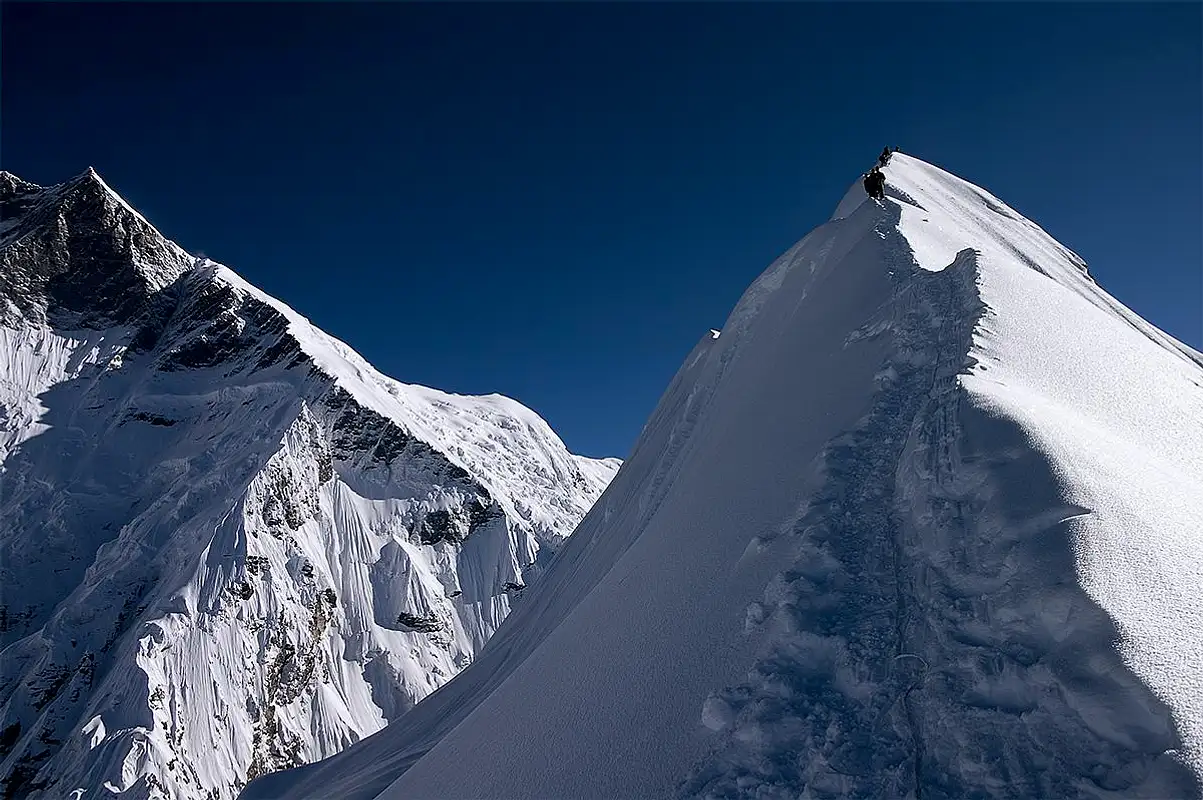
The great Everest Base Camp circuit via Gokyo, the Cho La pass and Island Peak is a Himalayan odyssey of rare intensity. This extraordinary journey introduces you to the hidden gems of the Khumbu region, including the sacred turquoise lakes of Gokyo and the breathtaking panorama from Gokyo Ri. You will then cross the formidable Cho La pass at 5,420 meters, before joining the moraine of the Everest glacier. The adventure culminates with the technical and physical ascent of Island Peak (Imja Tse) at 6,189 meters, offering an unforgettable mountaineering experience facing the dizzying walls of Lhotse and Nuptse.
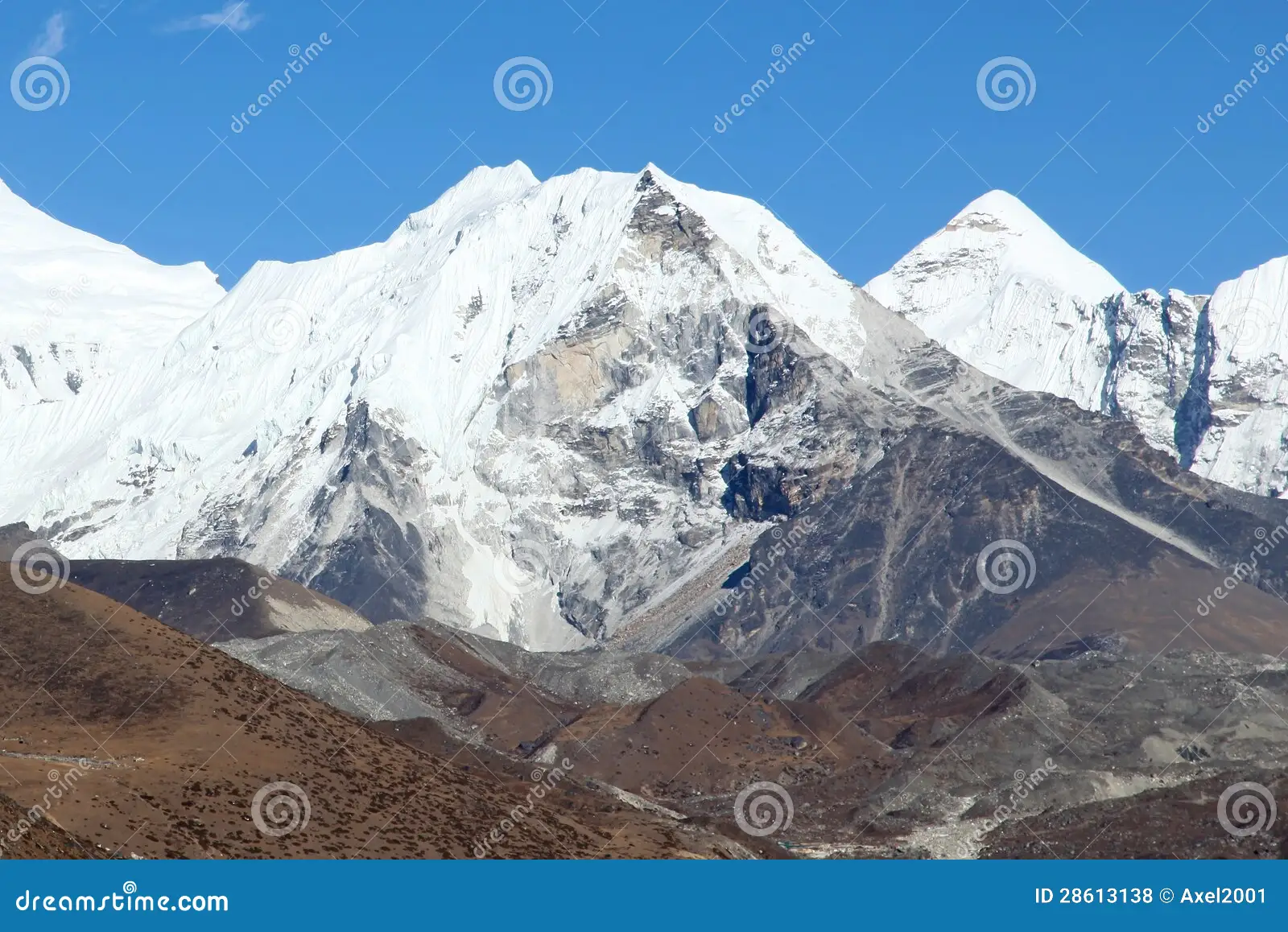
Island Peak Climbing with Everest Base Camp Trek landscape view
Trail Logs & Itinerary

1
Trekking Day Max Elev: 6,189 m/20,305 ft

2
Trekking Day Max Elev: 6,189 m/20,305 ft

• Swayambhunath (Monkey Temple): ancient Buddhist stupa perched on top of a hill offering panoramic views of the valley, inhabited by sacred monkeys and revered by both Hindus and Buddhists. • Boudhanath Stupa: one of the largest spherical stupas in the world, a major center of Tibetan Buddhist culture with the famous eyes of Buddha.

3
Trekking Day Max Elev: 6,189 m/20,305 ft

• 30-minute panoramic flight to Lukla • Start of the trek through traditional Sherpa villages • Walk: 4 hours

4
Trekking Day Max Elev: 6,189 m/20,305 ft

• Follow the Dudh Koshi River • Cross several suspension bridges, including the famous Hillary Bridge

5
Trekking Day Max Elev: 6,189 m/20,305 ft

• Entry into Sagarmatha National Park • Walk: 6 hours • Hike to Everest View Hotel (3,880 m) • Panoramic view of Everest, Lhotse, Ama Dablam and Thamserku • Visit to the Sherpa museum, cafes and local market

6
Trekking Day Max Elev: 6,189 m/20,305 ft

• Passage through Khumjung and rise to Mong La • Entrance into the Gokyo valley • Walk: 7 hours

7
Trekking Day Max Elev: 6,189 m/20,305 ft

• Gradual ascent along the valley • Superb views of Cho Oyu • Walk: 5 hours

8
Trekking Day Max Elev: 6,189 m/20,305 ft

• Trek along the magnificent Gokyo lakes • Arrival near the third lake • Walk: 4 hours

9
Trekking Day Max Elev: 6,189 m/20,305 ft

• Morning ascent to Gokyo Ri for a 360° panoramic view • Spectacular panorama of Everest, Cho Oyu, Lhotse and Makalu • Descent to Gokyo then continuation to Thangnaag • Walk: 5 hours

10
Trekking Day Max Elev: 6,189 m/20,305 ft

• Crossing the most technical pass of the route • Glaciers, seracs and impressive Himalayan landscapes • Walking: 7–8 hours

11
Trekking Day Max Elev: 6,189 m/20,305 ft

• Night in Lobuche • Walk: 5 hours

12
Trekking Day Max Elev: 6,189 m/20,305 ft

• Arrival at Gorak Shep then hike to Everest Base Camp • Night at Gorak Shep • Walk: 6 hours

13
Trekking Day Max Elev: 6,189 m/20,305 ft

• Sunrise on Everest from Kala Patthar • Descent to Tengboche • Walk: 6–7 hours

14
Trekking Day Max Elev: 6,189 m/20,305 ft

• Walking: 5 hours

15
Trekking Day Max Elev: 6,189 m/20,305 ft

• Walking: 3–4 hours

16
Trekking Day Max Elev: 6,189 m/20,305 ft

• Long day of climbing • 1 night tent camping • Walking / climbing: 8–9 hours

17
Trekking Day Max Elev: 6,189 m/20,305 ft

• Walk / climb: 8–9 hours

18
Trekking Day Max Elev: 6,189 m/20,305 ft

• Visit to Tengboche monastery

19
Trekking Day Max Elev: 6,189 m/20,305 ft

• Walking: 4–5 hours

20
Trekking Day Max Elev: 6,189 m/20,305 ft

• Walking: 6–7 hours

21
Trekking Day Max Elev: 6,189 m/20,305 ft

• Return flight to Kathmandu
• Transfer to hotel in Thamel

Inclusions

  • Welcome dinner
  • Airport transfers (international & domestic)
  • Roundtrip Flights from Kathmandu to Lukla
  • Professional French-speaking guide (salary, meals, accommodation and insurance included) as well as 1 porter
  • Assistance from a Sherpa for the ascent (technical support and accompaniment during the climb)
  • Sagarmatha National Park Permit
  • Pasang Lhamu Rural Municipality Tax
  • 3 meals per day during the trek (breakfast, lunch, dinner)
  • Accommodation in lodge/teahouse (twin room to share)
  • Fresh fruit served every evening
  • All government taxes and service charges
  • 1 night camping
  • Island Peak Climb Permit
  • Climbing equipment: altitude tents, fixed and dynamic ropes, snow bars, cooking equipment, mattresses, snow shovel, gas stove, rocky peaks, etc.
  • 2 nights accommodation in Kathmandu

Exclusions

  • Nepalese visa fees
  • Travel insurance including high altitude evacuation
  • Meals and accommodation in Kathmandu
  • Personal expenses (Wi-Fi, hot shower, snacks, charging, drinks, etc.)
  • Additional costs due to weather conditions, flight delays or itinerary changes
  • Tips for guide and porter
  • Mountaineering shoes, crampons, harness, helmet, carabiners, prusik rope
  • Descender (figure 8) and ascender (Jumar)

Frequently Asked Questions

The best seasons for trekking in Nepal are spring (March to May) and autumn (September to November). The weather is generally dry, the skies are clear and daytime temperatures are pleasant for walking, offering spectacular views of the Himalayas.
Good physical fitness is recommended. You must be able to walk between 5 and 7 hours per day over mountainous and sometimes steep terrain. We advise you to practice cardio activities (running, hiking, cycling) a few weeks before your departure.
Our itineraries include gradual acclimatization days to minimize risks. Our guides are trained to detect the symptoms of AMS. In the event of persistent or severe symptoms, the guide will immediately arrange descent to a lower altitude and coordinate an emergency evacuation by helicopter if necessary.
Accommodation is in 'teahouses' (small local mountain refuges). The rooms are simple and shared, with two single beds. Meals are prepared on site and feature energetic local cuisine like Dal Bhat (rice, lentil and vegetable soup), as well as Western dishes (pasta, soups, eggs, bread).
Yes, it is strictly obligatory to take out travel insurance covering high altitude trekking (up to the maximum height of your route) as well as search, rescue and emergency medical evacuation costs by helicopter.
To protect the fragile Himalayan environment, we discourage the purchase of single-use plastic water bottles. We recommend bringing reusable water bottles and using water purification tablets (like Aquatabs) or a portable filter. You can also buy safe boiled water at teahouses.
The mobile network (Ncell and NTC) works correctly in the lower valleys but becomes weak or non-existent at high altitudes. Most teahouses offer paid satellite Wi-Fi (around $2-$5 per day), but the speed can be slow and unstable depending on weather conditions.